We don’t just act these parts; we live them
The Robot Who Looked Like MeThe expression “We don’t just act these parts; we live them” is Natchez Parker’s insistence that the Western performers’ roles carry obligations beyond the scene. Addressing Tom Washburn as a friend rather than as a fellow actor, Parker makes the line a claim about identity, loyalty, and the responsibility to see a chosen role through to its end.
Meaning and Context
Parker rejects the idea that their cowboy lives are only a performance. The company lets the men dress in elaborate clothes and swagger through the Territory, and pays them well to inhabit that world; in return, he argues, they must continue to act with the courage their parts demand. A costume alone does not make a cowboy: the test is whether a man can wear a gun and use it.
Parker’s Appeal to Tom Washburn
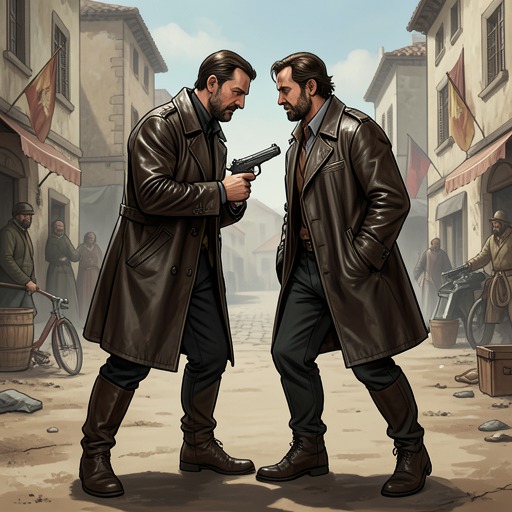
The expression comes during Parker’s effort to stop Tom Washburn from riding away. He first argues that Tom cannot escape himself by leaving, then describes their work as a bargain that requires the men to remain true to their roles even when doing so is difficult. Parker makes the appeal personal: he recalls Tom’s arrival in the Territory as a frightened young man who earned his place through sheer guts, and says they have been closer than kin ever since.
Tom treats Parker’s speech as a breach of the performance, calling it a beautiful speech that has spoiled the scene and telling him to get back in character. Parker rejects that distinction in turn. He says he no longer cares about the scene or The Movie and is speaking directly to Tom. The phrase thus marks a clash between Tom’s attempt to preserve the fiction as fiction and Parker’s conviction that their shared life in the Territory has made the parts real.
Dramatic Significance
Parker’s words make loyalty a test of lived conduct rather than theatrical appearance. His distinction between dressing as a cowboy and actually using a gun gives the expression a material edge: the role is not proven by costume or swagger, but by action and by accepting its risks. The appeal also raises the stakes of Tom’s departure from a question of travel to one of self-understanding and obligation. Immediately afterward, Parker grabs Tom’s shirt and holds a knife in his other hand, turning the attempt to keep him from leaving into a physical confrontation.